Showing posts with label audio books. Show all posts

Tuesday, April 20, 2010

Maryrose Wood


I read an ARC of Wood's The Incorrigible Children of Ashton Place: The Mysterious Howling a number of months ago and absolutely adored it. But today, when I went to post on the audio book version, I discovered my total failure to post my adoration here. Incorrigible Children stars Miss Penelope Lumley, a 15 year old from the Swanburne Academy for Poor Bright Females. Penelope is educated, well-mannered, and purposeful. When she discovers the children she has been hired to care for were raised by wolves, she takes it in stride. Despite the low expectations of the foundling's parents, Miss Lumley soon has them learning manners, Latin, and how to refrain from chasing squirrels.

It is Miss Lumley's strong character and the wonderfully Gothic voice that pulled me in. The story is dark and mysterious, but also, let's face it, silly. People have been comparing it to Snicket's A Series of Unfortunate Events, and this book deserves to be compared to Snicket. The tone and length of Incorrigible Children is very similar to Snicket's, as is the middle-reader audience suggestion. And it manages to be just as dark and strange and wonderful. But don't think this is a knock-off, the adventure goes very much in it's own direction and Wood possesses a strong voice all her own. I also think the 15 year-old age of Miss Lumley, and the amount of time the reader shares with her, may also recommend the book to a slightly older (and perhaps reluctant) readership.

Now the audio book. Katherine Kellgren did the audio books for the Enola Holmes series, which I adored. Her beautifully expressive voice and accent are perfect for books written to sound like British children's classics. If I had been asked to choose the reader for Incorrigible Children, it would have been Kellgren, and we are so lucky to have her vocal skills for this audio book (now I just need to get my hands on a copy).

And now for more Maryrose Wood! While picking through an avalanche of ARCs, I came across The Poison Diaries, due out in August. It wasn't until I read the author's bio that I even realized the author was Wood (I'm sorry. I know I should remember these things, but most of the time it's the cover image that stays with me; I am an illustrator after all).


The tone of The Poison Diaries is not as much fun as Incorrigible Children, but I think that is due to the difference in audience (teen versus middle reader). While I prefer the narration in Incorrigible Children, The Poison Diaries is good. Allow me to elaborate; there is a lot of rubbish being published today as publishers look for the next big teen or crossover phenomenon. But there are gems in the rubbish heap, it just takes a lot of digging. As romantic Teen novels go, The Poison Diaries is a good one.

The book is told in the first person, and we begin listening to the narration of Jessamine, the daughter of a herbalist with a special garden devoted to poisonous plants. Jessamine is not allowed in the poison garden, despite the fact that she is no longer a child, something that grates on her nerves. But Jessamine's life is changed by the arrival of very strange young man called Weed, who, according to the keeper of a madhouse, can cure the mad and make the sane sick. Weed, Jessamine's father is assured, is mad, but her father is also certain that Weed possesses a vast knowledge of plants that should not be kept secret. But through Weed's own voice (he narrates a few of his own chapters) and Jessamine's discussions with him, we learn that Weed's skill comes from his ability to talk to plants.

The tale, based on a concept by the Duchess of Northumberland, is dark and intreguing, with a cliff-hanger of an ending indicating sequels to come. Readers will enjoy Weed's growth (it has to be a pun, horrible though it may be) and the budding relationship (ditto) between him and Jessamine. And when you throw some poison on that lot, the intrigue only increases.

Monday, March 15, 2010

Fairies and fairy tales (briefly)

Author Patricia McKillip came up in a book discussion with a friend of mine. We both enjoy McKillip's work and were discussing it's unique flavor.

The best way I can describe this is the classic fairy tale quality of McKillip's work. This is not due to her acknowledgment of fairytales, but in the very nature of her characters. Immortals and fairies are not human. In McKillip's non-mortal characters, there is a definate disconnet with emotion, a tendency to see only lusts and desires. Even her human character lack certain aspects of humanity; they are lost in the haze of the story, removed from even the setting's 'normal' or 'real' world, just the way heroes, heroines, princes, and queens are in stories.

After discussing characters I (being an innately visual person) moved on to visuals. The descriptions in McKillip's novels are detailed, intricate, finely woven like a tapestry or illuminated manuscript. They weave a detailed story, yet one that leaves you with the haze of a dream. A number of McKillip's books feature covers illustrated by Kinuko Craft. Craft's obsessively detailed paintings are perfect (in my mind) for McKillip's work, mirroring her connection to classic fairy tales and medieval artworks.

McKillip's characterizations of fairy make me think of Susanna Clarke, author of Jonathan Strange and Mr. Norrell and The Ladies of Grace Adieu. Clarke's fairies are devious, lustful creatures. You cannot apply human reason to them for they are not human. Her fairies want to feed their lusts, with out consideration for anyone- mortals nor fair folk. With this, Clarke creates a classically mythic, darkly pretty, and undeniably other world of fairy.

For those of you unwilling or thus far unable to delve into Jonathan Strange and Mr. Norrell, try Clarke's collection of short stories: The Ladies of Grace Adieu. The hardcover is beautifully packaged, bound with grey bookcloth. Or try the audio recording. Short stories are great in audio form, as you don't need such long periods to listen (fit one in a long commute). Also, the British vocal talents of Davina Porter and Simon Prebble are wonderful to listen to (as is Prebble's audio recording of Jonathan Strange and Mr. Norrell).

This post was brought to you by the combined powers of the audio version of The Ladies of Grace Adieu and a library book sale copy of The Changeling Sea.

Any other comments on faerie? Or books you think do a nice job at portraying the darker aspects of faerie? I haven't read much Charles de Lint, but I think he may...

Friday, February 12, 2010

Apologies, and a large number of things to find

Firstly, I'd like to apologize for the infrequency with which I post. This blog is currently secondary to my illustration one, and to a number of things I'm currently working on. I wish this were not the case, but so is life.
Secondly, books!

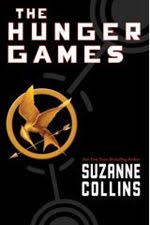
I've been trying to catch up on recent teen fiction. Last night I had to force myself to put down Catching Fire and go to bed. I devoured The Hunger Games last week and couldn't wait to get my mitts on the sequel (a search reveals the 3rd is soon to come!). My mom says the local school used it in reading classes this year as a follow up to The Giver. I'd like to take a moment to give my whole-hearted approval to teaching dystopian sci-fi in schools. While reading a book in class may ruin it for a select few, these people will probably find themselves picking it up at an earlier date anyway. I think science-fiction, particularly the dystopian novel, desperately wants to be discussed politically, socially, religiously, and economically. Discussing these aspects of a fictional narrative introduces students to viewpoints they may not see at home, or in the community in which they live. It also gives thoughtful students a lens through which to view their own society. So, though I never ever ever thought I'd say this, good job, Glens Falls Middle School. But don't think this book is just for the preteen and teen crowd- there is crossover potential here.
That being said, The Hunger Games and Catching Fire have much more to offer than the possibility of good discussion. The story will pull you in. Even thought you know there's a sequel, you will worry for the safety of the characters, rushing through the book to make sure they'll survive to the end. The Hunger Games are held once a year in the Capitol. Each of twelve districts is required to send one girl and one boy to participate. Everyone of a certain age has their name entered to be selected to go, but individuals may opt to enter their name again and, in return, will receive meager food for their family. Now these games are not along the lines of go fish, but more gladiatorial; those sent must fight one another to the death and the sole survivor receives food for their impoverished district. And now, as there are startling and wonderful surprises within the first few chapters, I will end, telling you to take this pause to reserve it at your library.
I've been listening to a number of audio books of late as I can do artwork and listen at the same time. I picked up some of The Adventures of Sherlock Holmes, and thoroughly enjoyed them. Also, as a friend said, British accents make listening most enjoyable. This is the sort of recording I'd recommend for a group trip or car ride as a range of people will enjoy it.
Terry Prachett. Also British, yes, but probably not who you expected to follow Holmes. I've spent most of my life not being a Prachett fan. Before you yell at me for this, hear me out. In a fictional world, the author must make you believe, without question, that the world and what happens in it are beyond a doubt. The author should not have to go off on frequent and lengthy tangents to explain why the world is how it is. Furthermore, a reader should not wish for this! Details and explanations should be woven into the narrative in such a way that the reader does not doubt the plausibility of of the world. And, as with art, vital symbols in the narrative should not require a symbolic dictionary written by the same author. Now that you have heard me out, I will go on to say some nice things about Terry Prachett, so there is no need to post those harsh comments you were composing.
Terry Prachett Audio Books. I loved listening to The Carpet People when I was little, never knowing it was a Prachett. I recently picked up Hat Made of Sky at the library and also enjoyed it. My friend Sarah, a Prachett fan, said that his young adult books are a good place to start, as falling headlong into Discworld may be a harrowing experience that only results in confusion. But I also managed to pick up an adult Discworld novel on audio, Unseen Academicals. And you know, I liked it. Yes, it was obvious what would happen in the end, but it was entertaining to listen to while my hands were occupied with sculpting and sewing (if I hadn't been otherwise engaged while listening, or had been reading it in it's novel form instead, it may not have gone down so well).

And now for something completely different!
The Astonishing Life of Octavian Nothing
- I know you weren't expecting that. This book has been sitting on my shelf for a few months now, but I've never gotten around to actually reading it. So when I ran across the audio book, I resolved to listen to it while working. I didn't enjoy it, but I think it is brilliant. First of all, though this book won a number of awards, it just doesn't strike me as something that would fly as a teen novel. I think Candlewick Press should have released it as adult fiction, for while teens will check the adult shelves, adults don't check the teen shelves as often. I can see why it was published as teen, the narrative is a coming of age story, but I think it might do better if it were shelved differently. Listening to the philosophic lectures, Revolutionary war stories, and racial and political discussions, it struck me that this would be a perfect book club book (adults or teens, but specifically adults) or teaching aid. For while it is fiction, M.T. Anderson worked to make the syntax, events, and ideas era-appropriate.


And back to books not listened to! Graceling is Kristin Cashore's debut novel. It's a quick, enjoyable read, but contains nothing surprising (to me). It would be a good romp for Tamora Pierce lovers, and the equivalent of a nice cup of hot cocoa on a cold day to fantasy lovers.

Now go to your local library or independent bookstore! Make a cup of tea! Dig out your chocolate stash! Read and prosper!