Friday, July 26, 2013
A strange and surreal novel from Patrick Ness
Monday, February 4, 2013
A Wrinkle in Time: Graphic Novel
Sunday, May 27, 2012
An emotional novel set in the near future
Radley has been volunteering at an orphanage in Hati, but when she hears that the President of the United States has been assassinated, she hops on the next plane back home. Phone access is spotty in Hati, so she doesn't get through to her parents before leaving. This doesn't worry Radley; her parents are always there to take care of her, to pick her up, to give her whatever she needs. But no one is at the airport. Her cell phone and credit card don't work, and she doesn't have a necessary paper work to cross state borders and head home to Vermont. So she walks, avoiding other people and the police, and scrounging for food. Radley arrives at an empty house. Fearful and starving, she decides to join the many walkers on the road and begins her journey to Canada. It isn't until she meets Celia and her dog that Radley realizes how lonely her life has become, and how much Celia needs her if she's to get to safety.
This could happen in a few months. Here, in the United States. Hesse's use of a possible future so close to the present makes her story terrifying. You don't need to see killings, or even need a main character to kill, in order for a book to be frighting. You just need a pinch of fear, a lack of food, and a few frightening things that people really go through. Hesse's photographs accompany the text and help carry the mood of the novel. Readers crazed by the dystopian frenzy will swallow this emotional, realistic, and deeply personal novel of a future that is closer than you might think.

Tuesday, December 27, 2011
Annotations part 4

Enchantress from the Stars by Sylvia Engdahl
New York, NY: Firebird (1971).
Elana and her father's team are from a culture with interstellar travel and their job is to ensure that more primitive civilizations are allowed to develop naturally. When they end up on a medieval planet being colonized by a culture with space-travel capabilities, they assist the natives in vanquishing the colonists by posing as Enchanters who know magic. Told from the point of view of all three cultures, Engdahl breaks down fantasy and science-fiction, examining how viewpoint can turn science into magic or vice-versa, bringing readers to question their own notions of genre and convention.
Feed by M.T. Anderson
Somerville, MA: Candlewick Press (2002).
On a futuristic Earth, most people have a constant Feed into their brain. Media, school, and relentless advertising are streamed through this Feed. When teen Titus meets Violet, he's immediately smitten, but becomes revolted and confused when her Feed starts malfunctioning, disabling her entire body and memory. Anderson has created an intriguing technological dystopian future, but his characters fail to bring the questioning of their technological existence to any conclusion.

Friday, December 23, 2011
Annotations part 2: Teen Novels

Finnikin of the Rock by Melina Marchetta
Somerville, MA: Candlewick Press (2010).
Ten years ago, the royal family of Lumatere was murdered, the throne seized, and a curse placed over the entire country. While most citizens now roam as exiles, Finnikin, his mentor, and Evanjalin, strong young novice, are intent on bringing Lumaterians back to their land. While this is a high fantasy novel, it is the realistic refugee story embedded in the fantasy that gives the novel its' strength. Disease, hunger, and brutality are all realistically portrayed but in the end, the refugees' desire to cling their customs, language, and land, not just the fantastical aid of magic and swords, is what helps them fulfill their quest.
I want to put stars all over this book; It is absolutely brilliant. Note: recommended for ages 14+ due to content.
Before I Fall by Lauren Oliver
New York, New York: Penguin (2010).
When Sam realizes that she has died in a car crash, she suddenly wakes up on the morning of the day she died. A pretty, popular girl at a preppy Connecticut high school, Sam lives the last day of her life over and over again, each time taking a different approach. The result is the story of a mean girl coming to the realization of how her and her friends' bullying affected those around them. The only fantastical attribute of this decidedly realistic novel is Sam's ability to relive her last day. Though from a fresh point of view, Before I Fall is so full of brand references that it is unlikely to have staying power.
Un Lun Dun by China Mieville
New York, NY: Del Rey (2007).
Below London lies UnLondon, a place where broken umbrellas become moving Unbrellas and smog is a living being. Deeba and her friend are pulled into UnLondon, and even after seeing the destructive power of the Smog, Deeba vows to help destroy the Smog. With the help of many a strange creature, Deeba sets out on her unprophesized quest. This fantasy of parallel worlds is wildly inventive, with overwhelming descriptions of the strange buildings and creatures of UnLondon. However, even Mieville's creative world cannot hide the thinly-veiled and heavy-handed environmental message.
Sunday, December 18, 2011
Sci-Fi Time Travel

The Klaatu Diskos 1: The Obsidian Blade by Pete Hautman
One day Tucker's father disappears into a waver in the air, and returns a short time later with a strange girl. He won't say where he's been, or offer up a reason why he's lost his faith. Then Tunker's mother starts behaving oddly, and then, one morning, both his parents are gone.
Though the book begins slowly, I think this is due to it's place as the first book in a series, and therefore must set up characters and a world before plunging readers into the mind-bending places the Diskos leads to. Hautman uses the Diskos as portals for time-travel, portals that bring both readers and characters to question concepts of religion, progress, medicine, and history. I'm haunted by this book, continually trying to make the connections between time, space, and characters. Hautman has created an incredibly intricate world, and while only some strands of the story have come together by the end, I have no doubt that his sequels will prove he has spun a masterful web indeed.
Saturday, July 2, 2011
I stayed up all night reading for a very good reason

Ready Player One
by Ernest Cline
Crown, Random House, August 16th, 2011
It's the year 2044 and the real world is such a mess that people prefer to live in the OASIS, a virtual universe where almost anything is possible. Created by Halliday, the most brilliant game designer and 80s enthusiast, OASIS is the ultimate virtual existance where people exist as avatars any science-fiction or fantasy based concept is possible. When Halliday died, he left the ultimate easter egg in OASIS- his entire fortune and the rights to OASIS. Wade, like millions of others around the world, has spent the past five years searching for the easter egg, as has the IOI, a corrupt company intent on finding the egg for itself. Halliday was a man obsessed, and only one of a like mind will be able to unlock his secrets. Luckily, Wade has spent his life studying all things Halliday, and might just have a breath of a chance.
This fast-paced novel is a fun read and impossible to put down. Just as the line between real and virtual is blurred for Wade, readers will forget what is real and what constructed, falling completely into Wade's experience. Ready Player One is the complete book experience with thoughtful questions, epic battles, powerful enemies, personal journeys, and maybe even true love. Part of a complete breakfast, it's also chock-full of 80s references and trivia, sci-fi, fantasy, and video-game geekery. So grab a bag of corn chips, put on your favorite 8-track, and prepare yourself for an epic experience.
Though an adult book, I think it would be appropriate for teens ages 16 and up.
Sunday, June 5, 2011
If you like aliens, try these angels

Angel Burn
L.A. Weatherly
Just between us, I'm not really interested in picking up any book that has an angel in it. But Candlewick has such a good record, that I figured I'd give Angel Burn a try-- I couldn't put it down. Weatherly's angels aren't good, sweet, or angelic. Rather, they're predatory, hungry creatures, more like aliens than classic angels, who suck life-force from humans and leave them sick, dying, and in complete awe of angelic beauty. Add one half-angel girl and an angel-killing boy for a thrilling romantic adventure, the first of a series. If you're a science-fiction or fantasy fan, pick this up.
Saturday, June 4, 2011
The Chronicles of Harris Burdick

October 25th, 2011
by Sherman Alexie, M.T. Anderson, Kate DiCamillo, Cory Doctorow, Jules Feiffer, Stephen King, Tabitha King, Lois Lowry, Gregory Maguire, Walter Dean Myers, Linda Sue Park, Louis Sachar, Jon Scieszka, Lemony Snicket (introduction), and Chris Van Allsburg.
Very very rarely, I will swoon over a book. Swoon-worthy books must not just be well-written, they have to be beautifully packed, or have exquisite illustration, mostly, all three. Four stories into The Chronicles of Harris Burdick I was already swooning. Mind you, this is the ARC, too, not the gorgeous hardcover that will be the best holiday gift when it hits shelves.
What strikes me as I read- one story at a time, with space between each to savor- is the inventiveness of the writers. Van Allsburg's illustrations are surrealistically magical drawings, but they are snap shots. The ability to see the past, future, and alternative presents hinted at in these illustrations is an amazing imaginative feat.
Strangely enough, they now have my mind turning to Lev Grossman's The Magicians. There is a kinship here, I think. Both loved, enjoyed, and familiar, yet strange, surreal delights. Not matter how many times one sees a Van Allsburg drawing or reads a Lev Grossman novel, they will be strange and mysterious, even if you feel, as I do, that you somehow know them, even during the first reading.
From a darkly humorous story by Jon Scieszka to the fearful hint of magical oddness in Stephen King's, The Chroicles of Harris Burdick will leave readers spellbound. Adults who remember writing their own Harris Burdick stories and readers ages 10 and up will enjoy the strange magic of the tales. In a collection featuring such incredible authors as this, it will be difficult to choose a favorite.
Thursday, December 30, 2010
Shaun Tan Collection!

Lost and Found
by Shaun Tan
Scholastic, April 2011
Lost and Found is one of the most beautiful books I've ever seen. The reproductions are incredible, I found myself stroking some of the pages as if I might feel the texture of the paint. Each page is a marvel, with spaces that would be "empty" in other books containing layers of texture or related print. Shaun Tan's Arrival astonished me, but I've always found it difficult to get a hold of his other books in the United States. Now, there is no excuse. I have spent hours pouring over this book, dipping into a page or story, or reading from beginning to end, and I intend to spend many more hours marveling at the splendid work.
Each story has a weight to it, at once melancholic and fantastic, uplifting in its hidden details. The story of the rabbits is a dark, sad tale, based on our own history. The Red Tree more uplifting, finding magic in the world. The stories are deep, and the illustrations do them justice, extending and expanding them in unsuspected ways.
This is a books that needs to live on a table, not a shelf. Out where people can pick it up and become amazed by stories and images that will stay with them for weeks afterward.
Monday, August 2, 2010
How to Live Safely in a Science Fictional Universe

by Charles Yu
Pantheon, September
A novel about a man coming to terms with his father and his place in the world while travelling in (or avoiding, as the case may be) time. Part Neal Stephenson, part Dave Eggers, with a dash of Douglas Adams.
Charles Yu's father invented time travel before disappearing, his mother lives in a loop of time in which she makes dinner over and over again, and Charles, a time machine repair guy, spends his life existing out of time, searching for the time/space to which his father disappeared. From explanations of tenses as a basis for time travel to job opportunities in the Death Star's accounts receivable, How to Live Safely in a Science Fictional Universe covers the spectrum of science fiction today.
Friday, July 9, 2010
Middle Grade

A Series of Unfortunate Events
By Lemony Snicket
The Baudelaire children have an unfortunate future when their parents die. In fact, one horrible thing after another happens, and, of course, adults are no help of all. It’s up to the three siblings to evade Count Olaf, a master of disguise intent on stealing their fortune, despite the bewildering misfortunes that beset them. Luckily, Klaus has knowledge obtained from reading, Violet is an inventor, and the baby Sunny, well, she has some sharp teeth. Grade 2 & up.
A Wrinkle in TimeBy Madeleine L’Engle
One of my all-time favorite books. Meg’s father has been missing for years, gone on some top-secret scientific project for the government. One fall night a strange visitor, Mrs. What, and her friends Mrs. Who and Mrs. Which, appear to take Meg, her brother Charles Wallace, and her new friend Calvin on an adventure to save Meg’s father. This is no ordinary journey, requiring travel in time and space to reach their destination. And getting there is only the beginning. This classic science-fiction story is just as wonderful today as in 1963– there’s a reason the protagonist of When You Reach Me, this year’s Newbery Winner, carries a copy around with her. Ages 8 & up.

Peter & the Starcatchers
By Dave Barry & Ridley Pearson
Have you ever wondered how Peter Pan came to fly? Or exactly why he and Captain Hook are mortal enemies? The orphan Peter and brave Molly have to use their wits (and a band of porpoises) to outsmart thieving pirates intent on stealing the magical starstuff. Barry & Pearson will take you on a thrilling adventure with pirates, secret societies, fierce natives, sea battles, traps, and a pinch of magic, revealing the exciting adventures behind the boy who never grew-up. 3rd grade & up.

The Brixton Brothers: The Case of Mistaken Identity
By Mac Barnett
In the spirit of the Hardy Boys, the Brixton Brothers is a rip-roaring adventure. Steve Brixton is not a detective, but when the league of librarians (the most secret agents of the US government) catch him checking out a book on needlework, they target him as an enemy agent. With the help of his Bailey Brothers detective books, Steve is off to catch the true crook! This adventure will have you reading under the covers with a flashlight. Ages 8 & up.
Monday, March 15, 2010
2010 Newbery Award & the beloved A Wrinkle in Time
That's right, this year's Newbery Award: When You Reach Me, by Rebecca Stead. The best description of this book is From the Mixed-Up Files of Mrs. Basil E. Frankweiler meets A Wrinkle in Time. From the Mixed-Up Files of Mrs. Basil E. Frankweiler in that the setting is very similar, NYC 1979. A Wrinkle in Time is constantly referred to by the protsgonist, Miranda, who keeps a copy of it with her at all times. The story is not as otherworldly as Wrinkle, but contains moments hinting at other-worldliness, with the possibility of tesseracts running through the novel (if you don't know what a tesseract is, it's a wrinkle in time. Read the book of the same title to learn more). But a hint of this magical science is all you need. The complex issues of friends, classmates, the hobo at the corner, and realities of being a latch-key kid all feature in the narrative.Young readers will be smitten with Miranda's NYC latch-key existence. And while Miranda's life isn't perfect, it isn't bad. That's something I admire about Rebecca Stead's narrative, the normal issues of friends and school are enough, there's no horrible family life or abuse to deal with on top of everything.
A fifth-grade boy of my acquaintance, notoriously difficult to find books for, devoured this and loved it to the point of recommending it to others. Also recommended by middle school teachers of discerning taste and now the Newbery committee, this is not to be missed. However, if you haven't yet read A Wrinkle in Time, read it first, as it will only serve to enrich your experience of When You Reach Me.
Friday, February 12, 2010
Catching Fire
Now, since I have frittered away the day frivolously devouring fiction like a box of Belgian chocolates, I will force myself to do something constructive in the eyes of the rest of the world.
Apologies, and a large number of things to find
Secondly, books!

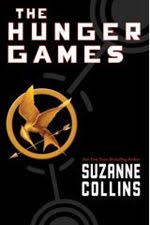
I've been trying to catch up on recent teen fiction. Last night I had to force myself to put down Catching Fire and go to bed. I devoured The Hunger Games last week and couldn't wait to get my mitts on the sequel (a search reveals the 3rd is soon to come!). My mom says the local school used it in reading classes this year as a follow up to The Giver. I'd like to take a moment to give my whole-hearted approval to teaching dystopian sci-fi in schools. While reading a book in class may ruin it for a select few, these people will probably find themselves picking it up at an earlier date anyway. I think science-fiction, particularly the dystopian novel, desperately wants to be discussed politically, socially, religiously, and economically. Discussing these aspects of a fictional narrative introduces students to viewpoints they may not see at home, or in the community in which they live. It also gives thoughtful students a lens through which to view their own society. So, though I never ever ever thought I'd say this, good job, Glens Falls Middle School. But don't think this book is just for the preteen and teen crowd- there is crossover potential here.
That being said, The Hunger Games and Catching Fire have much more to offer than the possibility of good discussion. The story will pull you in. Even thought you know there's a sequel, you will worry for the safety of the characters, rushing through the book to make sure they'll survive to the end. The Hunger Games are held once a year in the Capitol. Each of twelve districts is required to send one girl and one boy to participate. Everyone of a certain age has their name entered to be selected to go, but individuals may opt to enter their name again and, in return, will receive meager food for their family. Now these games are not along the lines of go fish, but more gladiatorial; those sent must fight one another to the death and the sole survivor receives food for their impoverished district. And now, as there are startling and wonderful surprises within the first few chapters, I will end, telling you to take this pause to reserve it at your library.
I've been listening to a number of audio books of late as I can do artwork and listen at the same time. I picked up some of The Adventures of Sherlock Holmes, and thoroughly enjoyed them. Also, as a friend said, British accents make listening most enjoyable. This is the sort of recording I'd recommend for a group trip or car ride as a range of people will enjoy it.
Terry Prachett. Also British, yes, but probably not who you expected to follow Holmes. I've spent most of my life not being a Prachett fan. Before you yell at me for this, hear me out. In a fictional world, the author must make you believe, without question, that the world and what happens in it are beyond a doubt. The author should not have to go off on frequent and lengthy tangents to explain why the world is how it is. Furthermore, a reader should not wish for this! Details and explanations should be woven into the narrative in such a way that the reader does not doubt the plausibility of of the world. And, as with art, vital symbols in the narrative should not require a symbolic dictionary written by the same author. Now that you have heard me out, I will go on to say some nice things about Terry Prachett, so there is no need to post those harsh comments you were composing.
Terry Prachett Audio Books. I loved listening to The Carpet People when I was little, never knowing it was a Prachett. I recently picked up Hat Made of Sky at the library and also enjoyed it. My friend Sarah, a Prachett fan, said that his young adult books are a good place to start, as falling headlong into Discworld may be a harrowing experience that only results in confusion. But I also managed to pick up an adult Discworld novel on audio, Unseen Academicals. And you know, I liked it. Yes, it was obvious what would happen in the end, but it was entertaining to listen to while my hands were occupied with sculpting and sewing (if I hadn't been otherwise engaged while listening, or had been reading it in it's novel form instead, it may not have gone down so well).
And now for something completely different!
The Astonishing Life of Octavian Nothing- I know you weren't expecting that. This book has been sitting on my shelf for a few months now, but I've never gotten around to actually reading it. So when I ran across the audio book, I resolved to listen to it while working. I didn't enjoy it, but I think it is brilliant. First of all, though this book won a number of awards, it just doesn't strike me as something that would fly as a teen novel. I think Candlewick Press should have released it as adult fiction, for while teens will check the adult shelves, adults don't check the teen shelves as often. I can see why it was published as teen, the narrative is a coming of age story, but I think it might do better if it were shelved differently. Listening to the philosophic lectures, Revolutionary war stories, and racial and political discussions, it struck me that this would be a perfect book club book (adults or teens, but specifically adults) or teaching aid. For while it is fiction, M.T. Anderson worked to make the syntax, events, and ideas era-appropriate.
And back to books not listened to!
Graceling is Kristin Cashore's debut novel. It's a quick, enjoyable read, but contains nothing surprising (to me). It would be a good romp for Tamora Pierce lovers, and the equivalent of a nice cup of hot cocoa on a cold day to fantasy lovers.Now go to your local library or independent bookstore! Make a cup of tea! Dig out your chocolate stash! Read and prosper!
Tuesday, January 19, 2010
Margaret Atwood
Amazed by The Handmaid's Tale, I recently picked up Oryx and Crake. The story is told in alternating chapters- some taking place in the present of the novel, others in the past. They are joined together by the protagonist, a man named Jimmy, who in the present sections of the books refers to himself as Snowman. The past sections of the book are set in a recognizable landscape. This is North America. People are divided into the educated and rich, who live in secure compounds, and the poor pleebs, who live in the equivalent of slums of today's large cities. The present sections are set in a less recognizable place, but Atwood's descriptions are simple, and woven into the text so completely, that one will not see a reason question their existence- simply how they came to be.
In this world, intelligence is valued and an ability to splice necessary. Those with the best living situations are those who possess the best knowledge of genetics. Food is genetically modified, new diseases are created (as are their cures), replacement organs grown, and new hybrid creatures produced. Jimmy, we soon learn, is not the brightest, and his future, it seems, does not lie in science and splicing. But his only friend Glenn's path is certainly that of biology and genetics- he is brilliant, seemingly unfeeling, with an awareness and knowledge that far surpasses most people around him.
Through Jimmy's eyes, and his observations of Glenn, light is shed upon the situation of the older Jimmy (now called Snowman) and the altered world he inhabits. Integral to the novel is the idea of humans playing god. While combining animals might be seen as godlike, the creations of a completely new species is arguably the action of a god. This god question is further explored in the recently released sequel, In the Year of the Flood. Here, we meet others who have survived the 'disaster' that separates Jimmy from his change to Snowman. The science and genetics of Atwood's world is underplayed here. Instead, we view the world through the eyes of those living in the pleelands. Here, religion plays an integral part of the story, and the scientific aspects are minimally involved, as they are less visible in the lives of the pleebs.
I'd rather not reveal the event around which these books revolve, part of the experience of reading them is to puzzle it together from the past and future, slowly filling in the gaps as you go. All in all, Oryx and Crake and The Year of the Flood are classic Atwood- skillfully written novels that raise interesting questions of the future of homo sapiens sapiens.
Additionally, Lucy Knisley has a comic on seeing Margaret Atwood read from The Year of the Flood.
Thursday, December 31, 2009
Jasper Fforde
Shades of Grey by Jasper Fforde, the first in a trilogy Ever since I picked up a copy of The Eyre Affair at a used bookstore in Chicago, I’ve been a bit obsessed with Jasper Fforde. Now on my second copy of The Eyre Affair (the first was lent and never returned) and with an addiction to the audio versions of his books as well, I hunger when I hear of a new publication.
I have been looking forward to Shades of Grey ever since the teaser went up on Fforde’s website. Unfortunately, the publication date was released, delayed, delayed again, and then finally established (of course, no matter when the release date is, it is always too far away). Lucky for me, the appearance of an advanced reader’s copy at the bookstore I work at meant no more waiting.
For those of you unfamiliar with Fforde’s work, he has written the Thursday Next series, the Nursery Crimes series, and now, Shades of Grey (the first in a trilogy). If you haven’t read Fforde before, start with the Thursday Next novels, move to Nursery Crime, an then pick up the newest. While Thursday Next is certainly my favorite, Fforde’s bizarre worlds and witty British humor are enjoyable in each of his series. Enough of this chatter- on to Shades of Grey.
Shades of Grey starts off slowly. Fforde’s new world is complex and confusing and it takes a good quarter of the book to establish an understanding of world and how it works. This initial section sets up the entirety of the book and if you hang in there, you will be rewarded. Fforde’s new world is wonderful; it has amazing potential which I hope will be reached in the sequels now that the whole messy business of explaining things is over.
The protagonist, Eddie Russett, is a fine, upstanding young man who truly wants the best for people. While he is not the sharpest tack in the tin, he understands the purpose of rules and governments, and how they can be used or abused. His easy going and generally genial nature allows him to befriend a host of individuals. Jane balances him well. She is smart, knowledgeable, volatile, and emotional. Together they create a dynamic pair who you hope will succeed in their plans (which I will not reveal to you).
With an intricate new world, endearing characters, and a political problem to be solved, Shades of Grey is a novel exploring the evils and corruption of governments and societies. But this intense science-fiction is tempered by Fforde’s delightful humor, so even those fictioneers who scoff at utopian novels may find something to love.
Wednesday, November 25, 2009
Neal Stephenson's Anathem
I left for a two month trip to Europe, taking only Neal Stephenson’s Anathem with me. As Cryptonomicon had taken me two months, I figured I’d be fine with just Anathem. I was in for a rather large surprise when I finished it in two weeks (it’s all that train time and decompressing after museums).
Anathem is more easily categorized as science-fiction than many of Stephenson’s other books- and this can only be seen as a compliment. Like Stephenson’s other books, Anathem uses religion, philosophy, and mathematics as an integral part of the novel. His exploration of such concepts is common in science-fiction, but Stephenson makes philosophic conversation more important than most other authors. But where this novel moves away from his others into the realm of sci-fi is his inclusion of aliens. Aliens? Do these not sound a bit strange for a Stephenson? Yes, they do. But his characterization of them is so perfect for the world he creates, there is no need to suspend disbelief, for by the time the aliens appear we have already questioned so much of the world through philosophical passages that we are ready to accept, question and learn. Not wanting to take away from the experience of reading, I will not say more, except that this is a wonderful introduction to Stephenson for sci-fi readers, and an interesting new novel for those already following his work.
Wednesday, September 2, 2009
Forty-two
Wednesday, February 18, 2009
Science Fiction (sci-fi)
Science Fiction
Dune by Frank Herbert- ok, so I do love sci-fi, but I really liked these and once you read the first, the sequels and prequels just scream at you from the shelves. Herbert has created an amazing and complex system of worlds complete with varying cultures, societies, and governments.
Ender’s Game* by Orson Scott Card- classic science-fiction. I read this in 6th grade and it was passed throughout my honors reading class. My mom (a middle school teacher) recommends people red it in high school, not middle school. I didn’t really like the sequels, but I liked the shadow books: Ender’s Shadow, Shadow of the Hegemon, Shadow Puppets, Shadow of the Giant, First Meetings: In the Enderverse, etc.
Shade’s Children by Garth Nix- Creepy and quite Matrix-like. The main characters are children but live in a futurist society where coming of age means one’s body parts are harvested for use in robotics. A very dark book with underlying social and governmental criticism (like any good science-fiction novel). By the author of the Abhorsen trilogy (see fantasy section).
The Terrorists of Irustan* and The Child Goddess by Louise Marley- Unfortunately, Terrorists is out of print, though you can get it for very little if you buy it used on Amazon (and it is worth buying a copy). I started reading Terrorists in a Barnes and Noble, but didn’t have the money to buy it, so put it back on the shelf. I went back to read the second chapter, but still didn’t buy it. The third time I went to buy the book, but I didn’t know the title or author, just what the cover looked and felt like. Two years later, browsing the Sci-fi section at a library, I pulled out a book- with the correct cover! Then, two years later, while looking through a Society of Illustrators annual, what should I find but an image of the cover! Both books bring up currently relevant social and political questions.
The Handmaid’s Tale- by Margaret Atwood- for older readers (high school/adult). A 1984ish novel dealing with a future society where sex is strictly for procreation. If you liked Children of Men, try this.
Maximum Ride: The Angel Experiment by James Patterson- A very dark young adult novel, the first in a series (I have not read the rest of the series…yet). The children in this novel have all been genetically changed (they have wings, hence the “angel”). Unfortunately, the novel ends with no real conclusion, so have the next volume waiting. Not recommended just before bed. Though appearing a hefty tome, this can be polished off in a long night (and you will probably want to read it in one go). It is a tense, fast-paced book.