Wednesday, February 18, 2009

Science Fiction (sci-fi)

Sci-fi does not always mean rockets and aliens.  Science fiction is the chance to explore the problems of society, cultures, governments, economic systems, education, religions, systems in general, etc.  in the safety of something that is not exactly the real world.  

Science Fiction

Dune by Frank Herbert- ok, so I do love sci-fi, but I really liked these and once you read the first, the sequels and prequels just scream at you from the shelves.  Herbert has created an amazing and complex system of worlds complete with varying cultures, societies, and governments. 

Ender’s Game* by Orson Scott Card- classic science-fiction.  I read this in 6th grade and it was passed throughout my honors reading class.  My mom (a middle school teacher) recommends people red it in high school, not middle school.  I didn’t really like the sequels, but I liked the shadow books:  Ender’s Shadow, Shadow of the Hegemon, Shadow Puppets, Shadow of the Giant, First Meetings: In the Enderverse, etc.   

Shade’s Children by Garth Nix- Creepy and quite Matrix-like. The main characters are children but live in a futurist society where coming of age means one’s body parts are harvested for use in robotics.  A very dark book with underlying social and governmental criticism (like any good science-fiction novel).  By the author of the Abhorsen trilogy (see fantasy section). 

The Terrorists of Irustan*  and The Child Goddess by Louise Marley- Unfortunately, Terrorists is out of print, though you can get it for very little if you buy it used on Amazon (and it is worth buying a copy).  I started reading Terrorists in a Barnes and Noble, but didn’t have the money to buy it, so put it back on the shelf.  I went back to read the second chapter, but still didn’t buy it.  The third time I went to buy the book, but I didn’t know the title or author, just what the cover looked and felt like.  Two years later, browsing the Sci-fi section at a library, I pulled out a book- with the correct cover!  Then, two years later, while looking through a Society of Illustrators annual, what should I find but an image of the cover!  Both books bring up currently relevant social and political questions. 

The Handmaid’s Tale- by Margaret Atwood- for older readers (high school/adult).  A 1984ish novel dealing with a future society where sex is strictly for procreation.  If you liked Children of Men, try this.  

Maximum Ride: The Angel Experiment by James Patterson- A very dark young adult novel, the first in a series (I have not read the rest of the series…yet).  The children in this novel have all been genetically changed (they have wings, hence the “angel”).  Unfortunately, the novel ends with no real conclusion, so have the next volume waiting. Not recommended just before bed.  Though appearing a hefty tome, this can be polished off in a long night (and you will probably want to read it in one go).  It is a tense, fast-paced book.  

Ridiculous Fiction

In fact, this isn’t all ridiculous.  But in the right frame of mind it can be.  It all depends on how deep you decide to dive. 

The Eyre Affair, Lost in a Good Book, The Well of Lost Plots, Something Rotten, and First Among Sequels by Jasper Fforde- I loved all of these.  Literary mysteries, they contain many references to literature, art, and pop-culture.  Fforde creates a world in which the line between books and reality is mutable.  For book lovers.  The Audio versions are also very nice- the readers are British actresses with voices that are easy to listen to. 

A Sudden Wild Magic by Diana Wynne Jones- a ridiculous novel about adjacent universes.  Including a ridiculous coven, cat ladies, split people, magic, and kamikaze sex.  Not quite at Xanth stupidity level, but pretty close. 

Xanth books (series, doesn’t need to be read in order) by Piers Anthony- total, complete, and ultimate stupidity.  Perfectly enjoyable especially in June, during stressful times (oh-wait, that’s most of the time) and when you’re sick.  Funny and a good romp. 

Good Omens by Neil Gaiman and Terry Pratchett- I love Gaimen’s writing and Pratchett’s humor, and they balance each other well.  I have gotten into the habit of giving everyone this book for their birthday.  The apocalypse and an eleven-year-old antichrist who loves the world with a dash of angels and demons and a sprinkling of humorous footnotes. 

Ella Minnow Pea* by Mark Dunn- an epistolary novel taking place on an island that worships the god Nollop, the creator of the sentence “The quick brown fox jumps over the lazy dog.”  When letters begin falling off a memorial of the sentence, citizens take it as a sign from the great god Nollop and remove the letters from their letters and speech.  Some of the novel’s brilliance comes from the fact that Dunn removes each letter from the actual novel as the citizens remove it from their speech. 

The Hitchiker’s Guide to the Galaxy* and sequels by Douglas Adams - he hung-out with the python gang and you can tell.  A laugh-out loud sci-fi must full of brilliant metaphors.  Recommended by all.  The movie isn’t bad, but read the books first.  The audio book is also good.    

Fiction

Fiction is like Chocolate.  Stranger than Fiction is also a good movie.  Gimme Fiction is a horrid way to ask for a novel.  It's also a Spoon album.  

The City of Dreaming Books by Walter Moers- translated from the German, this book also contains pen and ink illustrations by Moers.  The story takes place in a land in which books are the most important things in the world.  The story is told by a book-loving dinosaur of sorts, a Lindworm.  He goes in search of the perfect author and is dragged into the catacombs- the city of dreaming books.  Rich language and dense descriptions make the book an adult book, though a dedicated middle or high school could tackle it. 

Peace Like a River* by Leif Enger- a book found through the Chinaberry book catalog.  Told by a young boy whose father does miracles, brother shots a man to protect the family, and sister who writes cowboy narrative poetry.  The middle sort of dips and you want to put it down- but don’t!!!

I Capture the Castle* by Dodie Smith (author of 101 Dalmatians)- A classic English coming-of-age novel written in a journal format that almost loses the journalness at times.  This book made me want to swim in moats and have midsummer rites.  The book looks long and intimidating but it will quickly pull you in.  Recommended for high school plus.  Not a bad movie either (of course, the book must be read first, but the BBC movie makes for an interesting comparison).

The Secret Life of Bees* by Sue Monk Kidd- Not too long and a good read (warning: it will make you want to eat honey).  As good as everyone said it was. 

My Antonia* by Willa Cather- a book that I thought would be work to get through- I ended up adoring it.  Cather lived and wrote in the American west in the first half of the 21st century.  Her work is filled with descriptions of period life and the prairie.. 

The Poisonwood Bible* by Barbara Kingsolver – Set in 1950s Africa and told by five different girls/women.  The alternating points of view allow readers to see events from different angles and see the world through the lens of each woman’s opinions.  Good female protagonists and some lovely description.  Interesting emotions and relationships as well as reflections upon the setting.  I did two views of the same event as a speech and debate piece. 

The Power of One by Bryce Courtenay- My advanced 8th grade reading class found this “Totally amazing.”  Also set in Africa, it follows the journey of a boy and his life as a Boer (has actual historical content).  Some chapters are so beautiful you just want to cry. 

Heart of Darkness by Joseph Conrad- a classic book with some beautiful analogies lines.  For older readers. 

The Chosen* by Chaim Potok- a classic that was recommended to me by adults and friends.  Do read it (also has a sequel: The Promise). 

The Bee Keeper’s Apprentice by Laurie R. King- This was recommended to me by a friend (thank you Allie) and it was a fun take on Holmes.  It is a part of a series following Sherlock Holmes and a young Jewish woman through their detecting adventure. 

Bel Canto- A book to be read in one sitting, or when one has the time to give it.  It is not a reread sort of book as the reader is put in an alternate state, a suspended state, and the enjoyment of the book is mostly in the process of reading it.

The Thirteenth Tale- A Jane Eyre-esque novel that bounces between the present and the past.  It features dark over tones and Victorian themes.  Lovers of high classic romance and Gothic novels will enjoy this, as should readers who enjoy classifying themselves as extreme readers (those who become lost in books and often prefer novels to the real world).  Also very good in audio book form. 

The Edible Woman by Margaret Atwood. 

Extremely Loud and Incredibly Close by Jonathan Safran Foer- told by an incredibly bright young boy trying to unravel a mystery set out by his father before he died in the twin towers on 9-11.  Interspersed with letters telling the story of his Grandparents.

Everything is Illuminated by Jonathan Safran Foer- the story of a young man, a Foer, searching for the story of his grandparents and what happened to them in Ukraine during WWII.  A quirky, touching story that includes flashbacks, weaving the story together from the past and present.  The movie is visually stunning and worth watching after reading the book. 

Mistress of the Spices  by Chitra Divakaruni

The Time Traveler’s Wife by Audrey Niffinengger- follows a couple’s relationship from both their points of view.  The husband is a time traveler, likely to pop into a different time at any point, while his wife knows he’s her husband before he’s ever met her.  The book chronicles a relationship tested by the oddities of time.  For adults.  

The Picture of Dorian Grey by Oscar Wilde- a classic with beautiful language and social satire.

Jonathan Strange and Mr. Norrell by Susanna Clarke- A regency era novel about two magicians in Wellington’s England.  The language is reminiscent of the regency period and Clarke weaves a tale of shadows, magic, madness, and manners.  Contains excessive footnotes including stories and myths referenced in the novel.  Book includes charcoal illustrations by Portia Rosenburg.  

Introduction Or So You Know the Qualifications of the Author

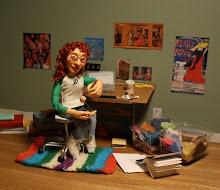
About the author: I am a senior illustration major with minors in art history and creative writing at the Maryland Institute College of Art.  I was born and raised in a boring little town in Upstate New York that didn’t get a bookstore until I went away to college.  But that’s the simple stuff.  

As a child, I memorized Madeline so that I could recite it as if I were reading.  My first baby doll was named Mickey after the Sendak character, and television wasn't exactly present in my childhood.  When I was two and a half and my baby brother was brought home from the hospital, I surrounded him with books and told him stories all day.  Later, my mother read my brother and me Narnia and the Enchanted Forest Chronicles while we drew pictures of the characters, illustrating the book as she read.  I didn't learn how to read until second grade, which is considered late for public educations (though not other forms of education).  But once I began it was Oz and Little House and Anne of Green Gables.  

I spent my elementary school years reading until way past my bedtime through the careful concealment of flashlights and timing the click of my reading lamp to coincide with the creak of my parent's steps on the stairs.In third grade, I became a part of a mother daughter book club with four other girls and their mothers.  The club lasted through my tenth grade year of high school.  The club was a wonderful chance to have truly stimulating conversations about books (unlike those had in school).  Note: entries marked with * indicate the book was read with mother-daughter book club. 

In fifth grade my copy of Harry Potter and the Chamber of Secrets circulated the class.  In middle school, I taught myself the art of reading under desks and convincing school librarians that I needed new books regardless of whether or not they had been cataloged.  I read the school copy of the Amber Spyglass before it had a label and plastic cover and, unfortunately for exams, Abhorsen just had to be had the day it was released (though in my small town this required a thirty-minute drive on the highway to the new bookstore.  Before, it was an hour.)  High school brought about reading on top of desks (no one seemed to care), and Herbert’s epic DUNE was devoured above-desk during math.  

Since middle school I have been asked for recommendations and I soon found it easiest to create a master list of books.  This list is the updated and edited version of that original list, though it is by no means complete or completely accurate.  I generally edit the list for the particular person I am giving it to, based upon tastes, reading level, and maturity, but here it is in its entirety.  This list includes things found in children’s through adult.  I cannot make judgments on what is right for you or your child, but I can make suggestions.  If you are considering this list in regards to your children, the only way to know what’s good for them is to read the book yourself and discuss it with them.  

I am currently studying children’s illustration (combining my love of writing and art).  Additionally, I have been working on my minor’s thesis, which studies the current phenomenon of crossover fiction (books which are read by both children and adults).  I was unsurprised during my research to find that the current vogue of crossover literature was founded on the books I devoured during my middle and high school years- many are to be found in the list.  It is this thesis, and the urging of my classmates, that has finally pushed me to post this list.

WARNING: I am not to be blamed for resultant reading under desks, procrastination, or deterioration in sight due to reading with flashlights.  Note for flashlight readers: I was told, in middle school, by my optician, that reading in low light for long periods of time without looking up can strain one’s eyes.  While I’m not entirely sure of the validity of this statement, I can tell you that I have a classic bookworm’s eyes.  Beware.